

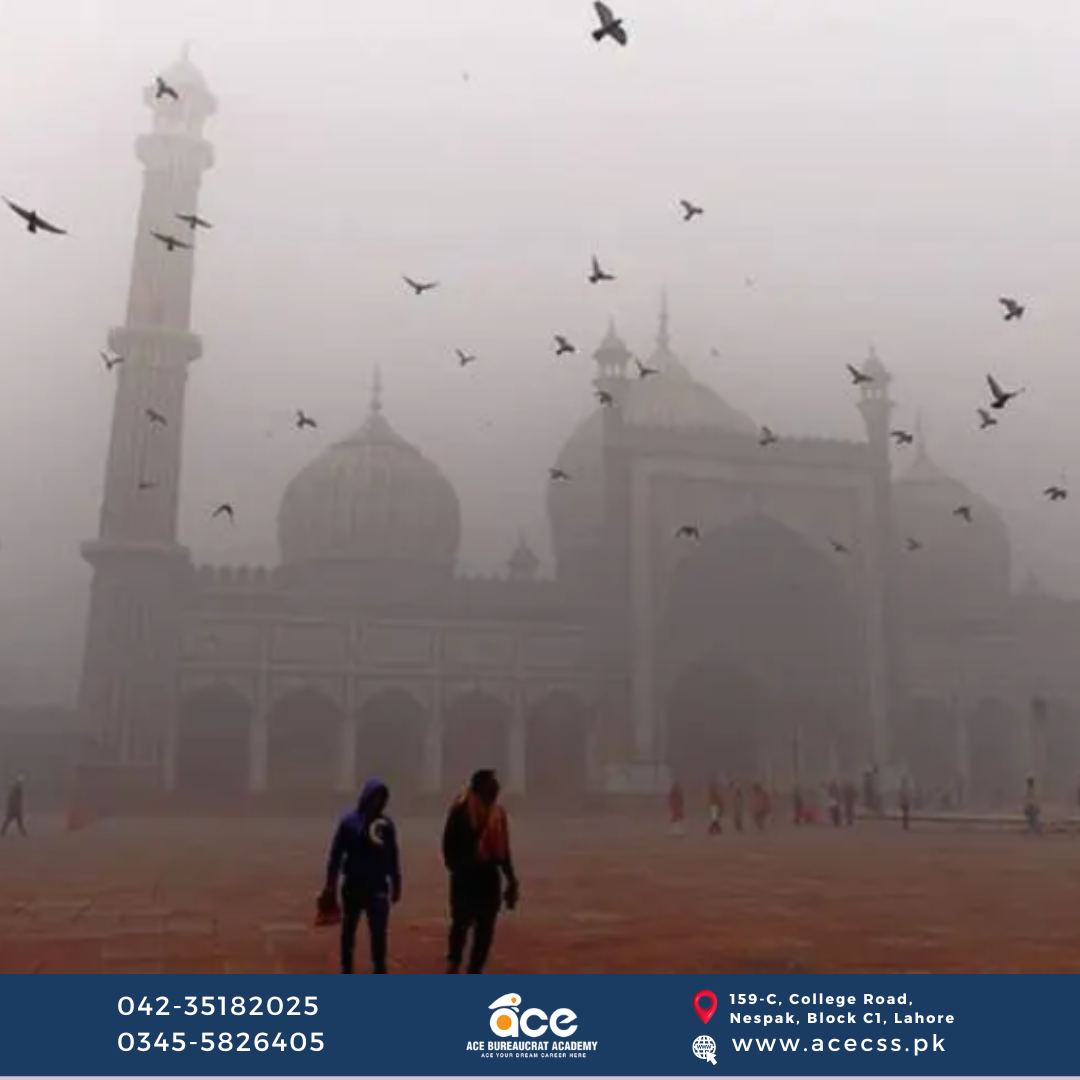
Confronting Winter Smog Crisis in Pakistan
Confronting Winter Smog Crisis: It’s that time of year again. Cities in Pakistan, especially Lahore, are struggling with heavy smog. The Air Quality Index (AQI) in Lahore has reached 394, nearly four times the healthy level. This has once again made Lahore the world’s most polluted city. Air pollution in Pakistan is now a public health crisis that needs urgent attention.
Similar conditions are seen in India. In winter, pollutants get trapped in the air, pushing Delhi into the “very poor” AQI category. The main sources of this problem are well-known: vehicle emissions, industrial pollutants, and crop residue burning. India and Pakistan face challenges in addressing stubble burning, despite its clear impact on air quality. Farmers often resort to this practice because it is the easiest way to clear fields.
Recently, farmers in Haryana, India, and Punjab, Pakistan, have faced fines and arrests for burning stubble. However, these measures only address part of a much larger issue.
In Pakistan, the government has taken steps to reduce smog. They have changed school hours and banned fireworks. India has also implemented emergency measures, like spraying water on roads and improving public transport. But these actions are just temporary fixes. Long-term strategies are still lacking. A major problem is the agricultural policies that leave farmers with few options other than harmful practices.
Pakistan has introduced “Anti-Smog Squads” to monitor stubble burning, but these efforts are just beginning. In India, promoting alternatives like subsidized machinery for residue management has faced challenges due to high costs and poor outreach.
Both countries need a comprehensive strategy that not only punishes harmful practices but also offers sustainable solutions. While discussions on climate diplomacy have occurred, real collaboration is rare. India and Pakistan could work together on technological advancements and monitoring air quality.
It’s also important to recognize that smog isn’t caused by agriculture alone. Both nations must invest in renewable energy and modernize industrial processes. Encouraging electric vehicle use and improving public transport are crucial steps. Without a significant shift in approach, both Pakistan and India will continue to face severe smog each winter.
Published in Dawn, 25 October 2024.
