

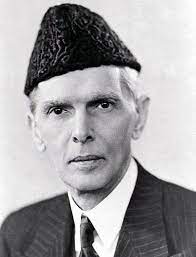
Jinnah was Jinnah
If Lord Mountbatten referred to Jinnah as a “maniac” it can be understood as a result of Jinnah’s decision to deny him. The opportunity to serve as the Governor-General of both India and Pakistan.
While Nehru accepted the position of Prime Minister under Mountbatten, in his lifetime, never had a superior. Mountbatten sought revenge by altering the boundary award, granting India access to Kashmir. This is a story in itself. The crucial point to note is that Mountbatten’s choice of adjective for he only emphasized qualities. That individuals of greater intellect and character than Mountbatten had described more eloquently.
Mountbatten’s frustration revealed his failure to dissuade Jinnah from pursuing his lifelong mission of creating Pakistan. Others saw in Jinnah a charismatic leader with integrity, intellectual brilliance, and a steadfast determination to secure a sovereign state for his people.
Aga Khan III had this to say about:
“Of all the statesmen I have known in my life—Clemenceau, Lloyd George, Churchill, Curzon, Mussolini, and Mahatma Gandhi—Jinnah is the most remarkable. None of these men, in my view, surpassed him in strength of character and that almost supernatural combination of foresight and determination that defines statesmanship.”

American author Stanley Wolpert, in his book “Jinnah of Pakistan,” a classic on Jinnah’s life, wrote:
“Few individuals significantly alter the course of history. Fewer still modify the map of the world. Hardly anyone can be credited with creating a nation-state. Mohammad Ali Jinnah did all three.”
Mrs. Sarojini Naidu, a political activist and author of “Mohammad Ali Jinnah, Ambassador of Unity,” remarked:
“It might be easier for a casual observer to identify his limitations than to define his virtues. he did not possess the versatile talents that made many of his contemporaries famous beyond their daily work. However, his greatness lies not in the breadth of his knowledge and experiences but in his faultless perception, refined mind and spirit, lofty purpose, and unwavering commitment to duty and honor.”
Sir Stafford Cripps, a member of the Cabinet Mission visited India in 1946 and who knew him well, described him as “a man of the highest probity and honor, difficult to negotiate with due to his unwavering determination.”
“Jinnah’s Admirers and Acknowledgment by Rivals”
Field Marshal Sir Claude Auchinlek admired for his “tenacity and tremendous personality, his inexorable determination.”
Even Jinnah’s political rivals, including Mahatma Gandhi and Jawaharlal Nehru, acknowledged his greatness. Gandhi said, “I believe no power can buy Mr. Jinnah,” while Nehru recognized him. as “one of the most extraordinary men in history,” attributing Jinnah’s success to his good character and political acumen.
British politician and author John Biggs-Davison noted, “Without Gandhi, Hindustan would still have gained independence, without Lenin and Mao, Russia and China would still have endured Communist revolution, but without him, there would have been no Pakistan in 1947.”
Sir Patrick Spens, India’s last Chief Justice before independence, vouched for Jinnah’s honor and honesty, emphasizing that he never deceived anyone about his goals or the means he used to achieve them.
Jinnah’s successful negotiating strategy was characterized by his unwavering commitment to a clear-cut idea while ignoring the challenges of detail.
and procedure, as recounted by Sir Perceval Griffiths during a London meeting.read more article
Author: Ace bureaucrat Academy
