

End Market Restrictions
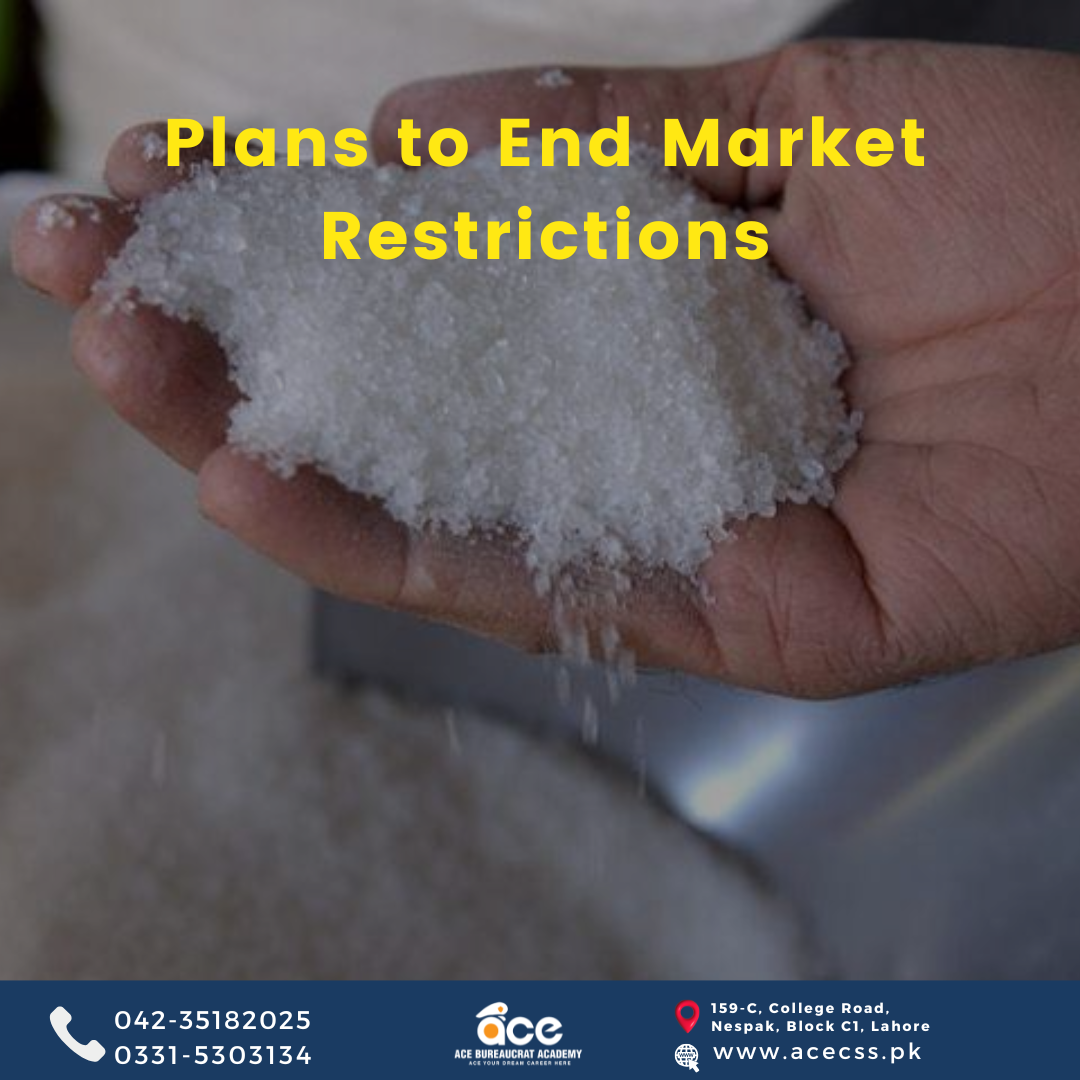
End Market Restrictions: The government decided to deregulate the wheat and sugar sectors. This marks a major market reform in Pakistan’s agriculture. For too long, the state controlled farm markets. They used price rules and subsidies. The government claimed this protected small farmers and ensured food security.
Policy Failure
Yet these policies failed to achieve their aims. Instead, they served a politically powerful elite: millers, agents, and agribusinesses. Subsidies and protections entrenched supply chain inefficiencies. They distorted market signals. This weakened the sector’s global standing. It also slowed farm mechanization and discouraged modern investment, deepening poverty.
End Corruption
The finance minister declared plans to fully deregulate. We welcome this effort to end unfair profit-making (rent-seeking). The minister asserted that deregulation must be “end-to-end.” This captures what farm policy lacked: the political will to free markets. Past governments flirted with reforms but reversed course easily. Taxpayers funded a bloated bureaucracy. Decades of state intervention fostered corruption and market capture.
Reform Risk
Genuine deregulation could expose inefficiencies and curb rent-seeking. It would align domestic prices with global trends, benefiting everyone. However, ending state support makes reform politically dangerous. Politicians use these interventions as electoral tools. The government’s recent reversal on the wheat market shows the absence of political will will be the real obstacle.
Published in Dawn, 7th November 2025
