

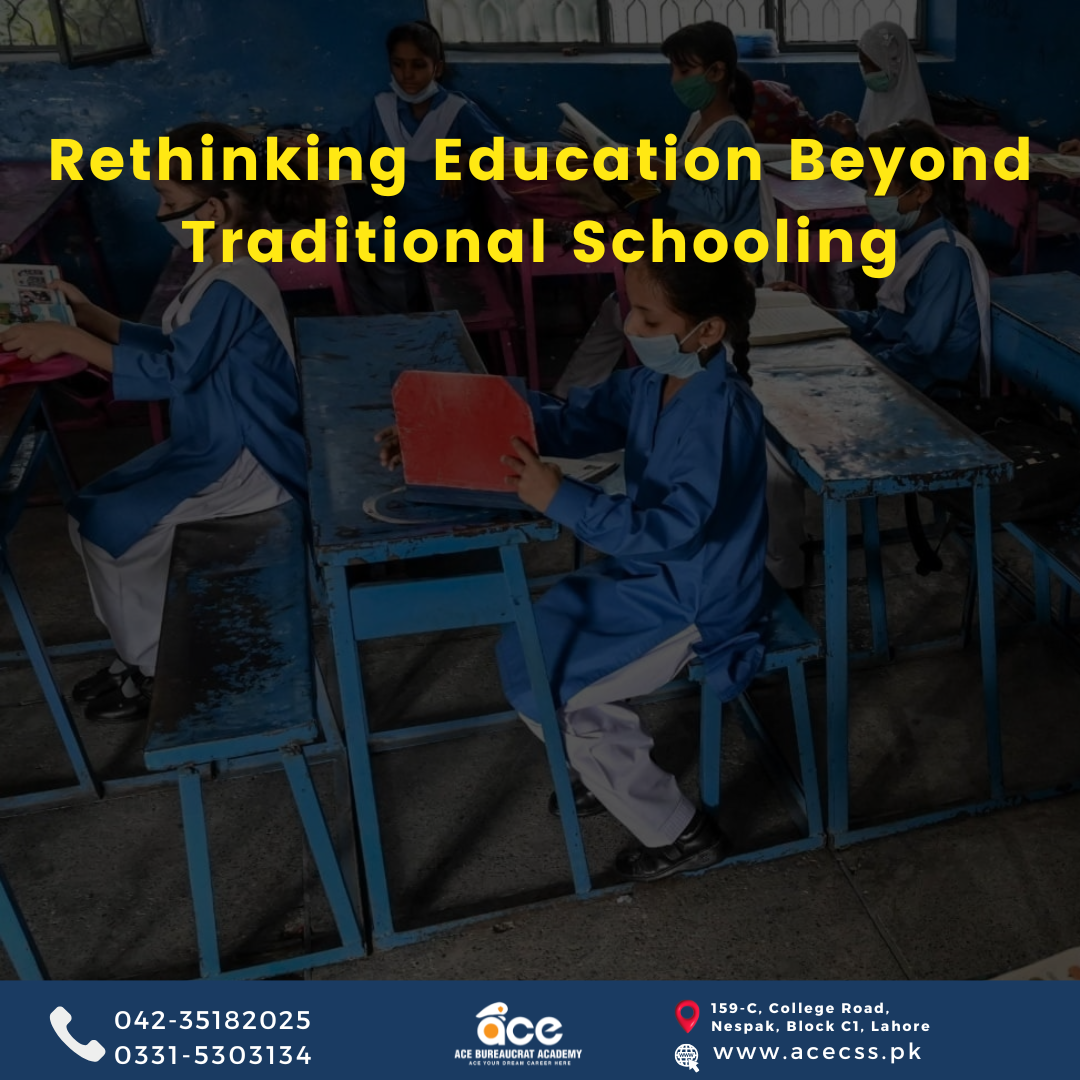
Beyond Traditional Schooling
Beyond Traditional Schooling: Homeschooling my daughter, Sitara, has been both rewarding and challenging. We still learn, make mistakes, and adjust our approach. That is part of the learning process.
Early School Years
Sitara spent her early years at a community school in her village. She learned through play, puzzles, sports, music, and art. Later, she joined a nursery school run by The Citizens Foundation. She was naturally shy, but school made her even quieter.
Language Barrier
I soon discovered the reason. The school taught in Urdu, not in her mother tongue, Sindhi. She often told me she could not understand the teacher. Instead of helping her learn, the classroom made her feel confused and isolated.
I did not want to judge education only by grades and exams. Many schools expect all children to learn the same lessons at the same pace. I felt this system did not suit her, so I brought her home.
Learning Freedom
We started learning in Sindhi. We used stories instead of textbooks. We used imagination for writing. Later, I introduced Urdu and English. I taught mathematics with coloured sticks, buckets, and toothpicks.
The results appeared quickly. When learning stopped feeling like pressure, Sitara became curious again. She started enjoying words, numbers, and ideas. Learning became exciting instead of stressful.
Rethinking Learning Goals
This experience made me rethink education. Many parents focus on grades, university admissions, and careers. They rarely ask if children enjoy learning. I did not want Sitara trapped in a cycle of exams, tuition, and competition.
Instead, I asked different questions. Does she sleep enough? Does she have time to explore her interests? Does she think independently? Or does she only memorise information?
Education Values Shift
I believe education should build character as well as knowledge. It should help children become thoughtful, capable, and responsible. Good grades matter, but curiosity, kindness, and lifelong learning matter more.
Even homeschooling could not completely escape traditional thinking. Some tutors focused on finishing chapters and meeting grade targets. They brought the same pressures found in many schools.
Different Learning Paths
Children learn in different ways. One child may excel in mathematics. Another may do better in languages. Some learn through movement. Others learn through observation. We should not expect every child to reach the same goal in the same way.
Many people worry about socialization. However, children learn social skills in parks, sports clubs, libraries, neighborhoods, and family events. Classrooms are not the only places where social learning happens.
Purpose of Education
We should ask a bigger question: what kind of people does our education system produce? Children need more than academic knowledge. They need to think independently. They need to question information and discuss ideas respectfully. They also need to handle failure and disappointment in healthy ways.
Education should teach practical skills too. Children should learn how to communicate well, protect their privacy, and use artificial intelligence responsibly. They should keep their ability to think for themselves.
Holistic Education Approach
Schools should also teach empathy, compassion, conflict resolution, self-respect, and respect for diversity. These values shape lives more deeply than many facts that students memorise and later forget.
Homeschooling allows me to explore these ideas. Some days still bring doubt and uncertainty. Yet education should leave room for experimentation. Instead of forcing children to fit systems, we should build systems that fit children.
Published in Dawn, 8th June 2026
