

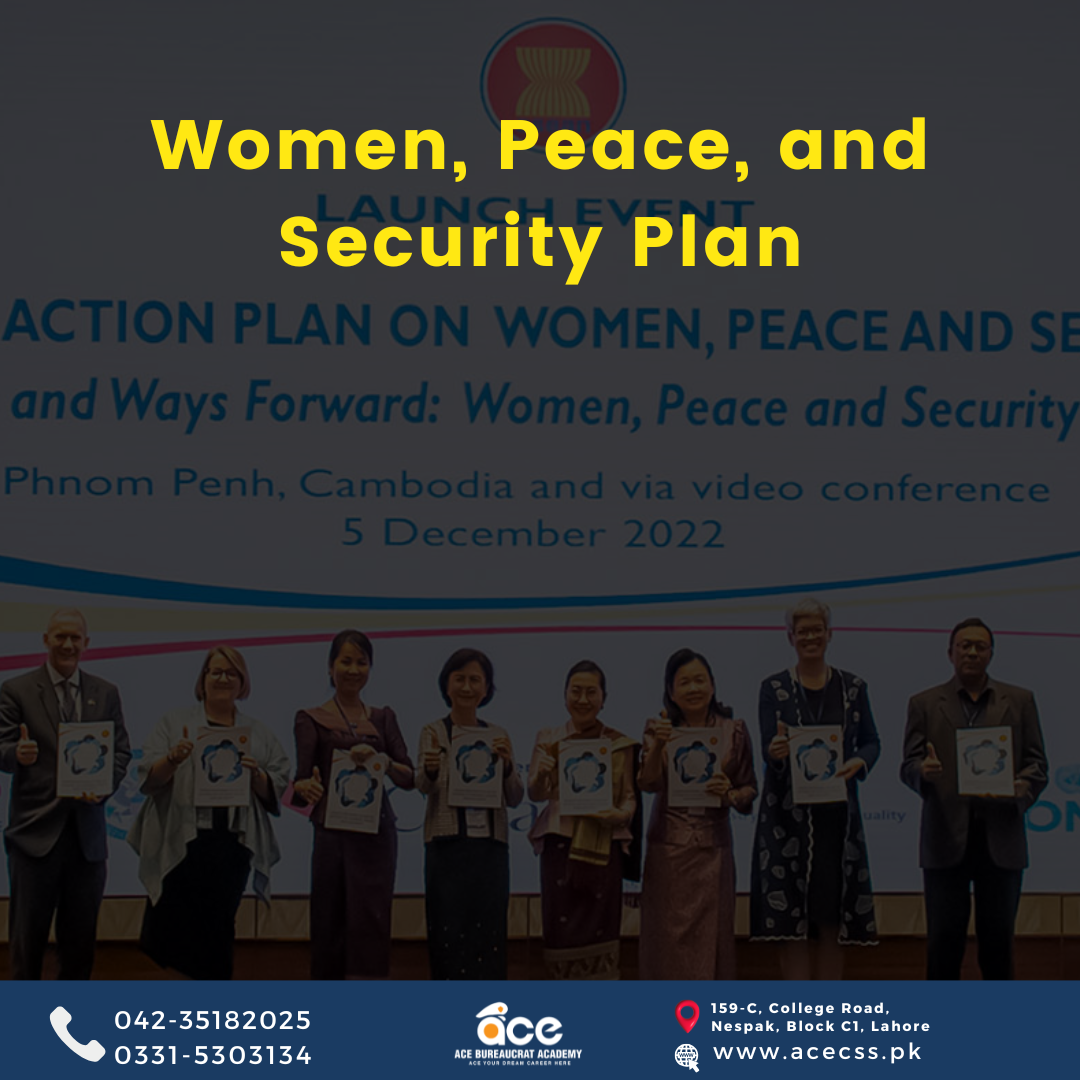
Security Plan
Security Plan: UNSCR 1325 (2000) links women with peace and security. It also highlights women’s role in preventing conflict, building peace, and improving security. Peace and security decisions must include women. Countries apply this agenda through National Action Plans (NAPs). More than 100 states have adopted NAPs. These plans focus on prevention, participation, protection, and relief and recovery. NAPs help improve policy, budgeting, reporting, and accountability.
Women Peacebuilders
The UN Security Council has adopted more WPS resolutions. These stress better data collection, stronger civil society, and greater inclusion of women in peace and security institutions. Women act as peace ambassadors in communities. They understand local needs and bridge social divides. They access spaces and information that men often cannot. This improves security operations and promotes inclusion. Localising UNSCR 1325 means adapting global commitments to local policies and practices. Governments should include women’s peace roles in political agendas. They should draft NAPs through consultation, set clear indicators, monitor progress, and allocate budgets.
Weak Institutions
Many challenges slow localisation. Institutions lack capacity and trained staff. Monitoring systems remain weak. Social norms limit women’s role in decision-making. Political will often remains low. Without NAPs and state commitment, civil society leads most efforts. Gender bias and security risks restrict women’s work as peacebuilders. Media rarely highlight women’s success in peace and security. After the 18th Amendment, provinces took charge of women’s development. Capacity and commitment vary across provinces. Poor coordination keeps efforts donor-driven. A force-based security approach sidelines women’s peace work.
Low Representation
Women remain underrepresented in justice and security institutions. Their numbers are rising but remain low. Few women serve as judges, lawyers, prosecutors, and police officers. Increasing their presence supports UNSCR 1325 goals. It also improves access to justice and public services. Security policies need a gender lens. Women make up half the population. UN Women supports this work. It identifies gender gaps and builds institutional capacity.
Coordination Issues
Weak data limits planning and evaluation. Limited budgets reduce long-term impact. Poor coordination weakens results. The SDGs support WPS goals through gender equality and strong institutions. Policymakers must move beyond statements. They must turn commitment into action. Real progress comes from including women in decision-making at all levels.
Published in Dawn,29th December 2025
